
Uniforms That Keep a Crew Looking Prepared
For cleaning teams, a uniform has to do more than carry a logo. It needs to stay presentable through dust, sweat, bleach splashes and constant movement. In Mbombela and nearby areas like White River, Hazyview, Malelane and Barberton, many crews work in schools, offices, guest houses, clinics and residential estates where first impressions matter every day.
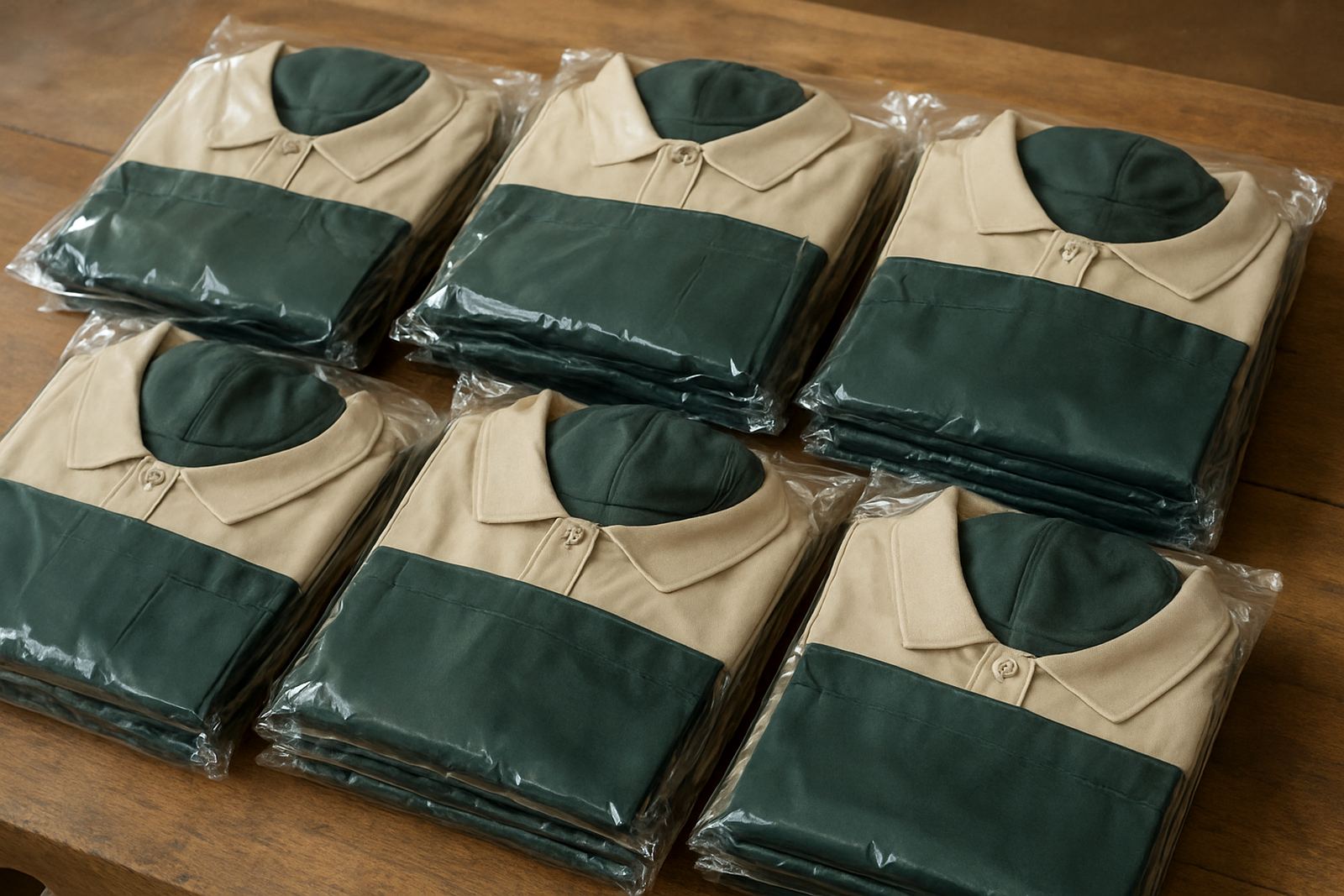
A good cleaning uniform should be easy to identify, quick to sort after washing, and comfortable enough for long shifts. The usual setup is a branded shirt or golf shirt with matching trousers or skirts, plus a cap or visor for outdoor work. For teams that move between sites, name personalisation helps supervisors and clients know who is who without asking twice.
We usually recommend simple, durable garments in darker or mid-tone colours so marks show less and the clothes keep a tidy look for longer. Light blue, navy, charcoal and black are common choices. For schools and facilities teams, a clear logo on the chest and a name on the sleeve or back gives a neat, practical finish.
Typical Kit for Cleaning Teams
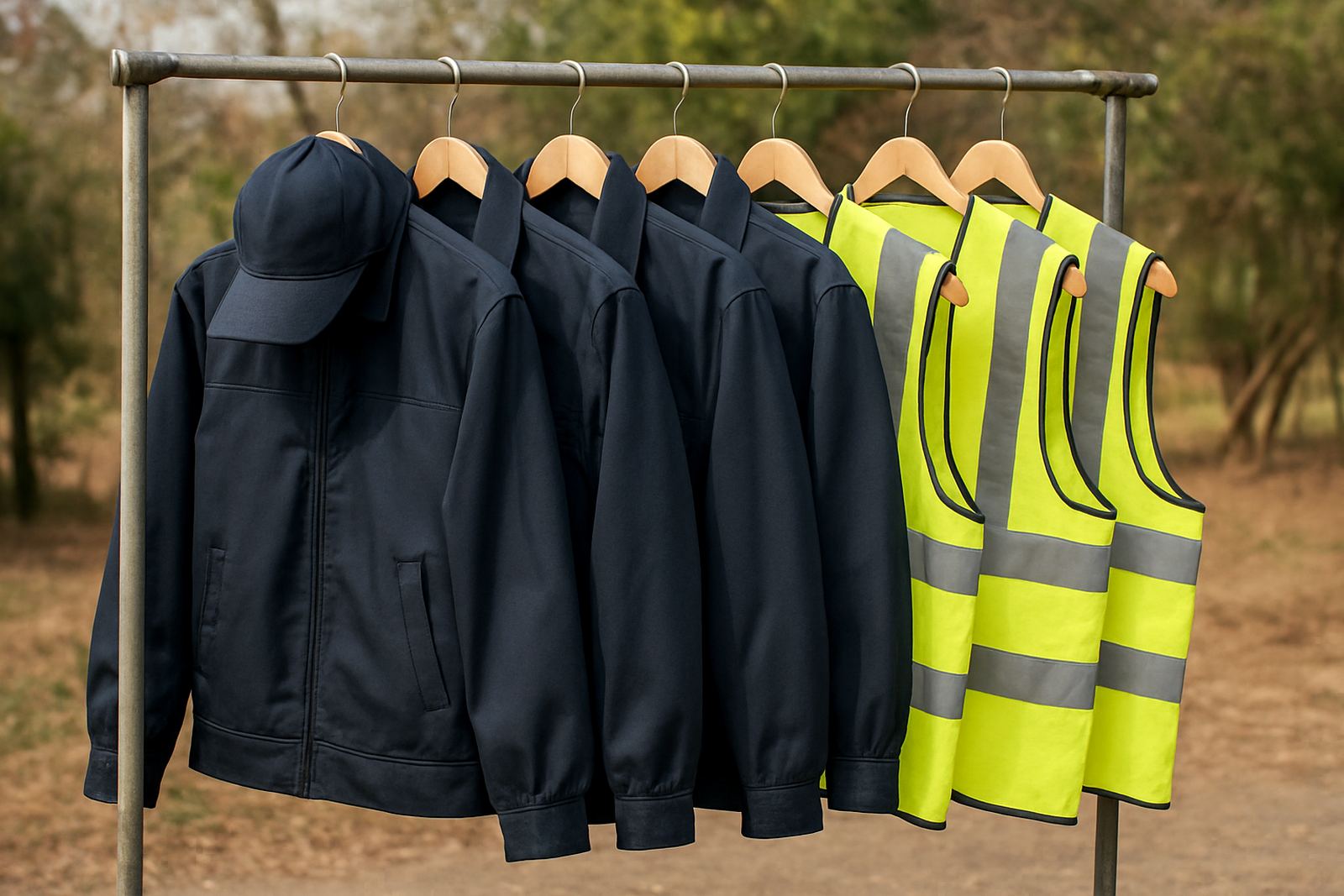
The right mix depends on whether your crew works indoors, outdoors, or both. Indoor cleaners often prefer light, breathable shirts with short sleeves. Outdoor teams and garden cleaners may need long sleeves, caps and tougher fabrics. If your staff handle chemicals or heavy wet work, we can plan for workwear that is comfortable but still holds shape after repeated washing.
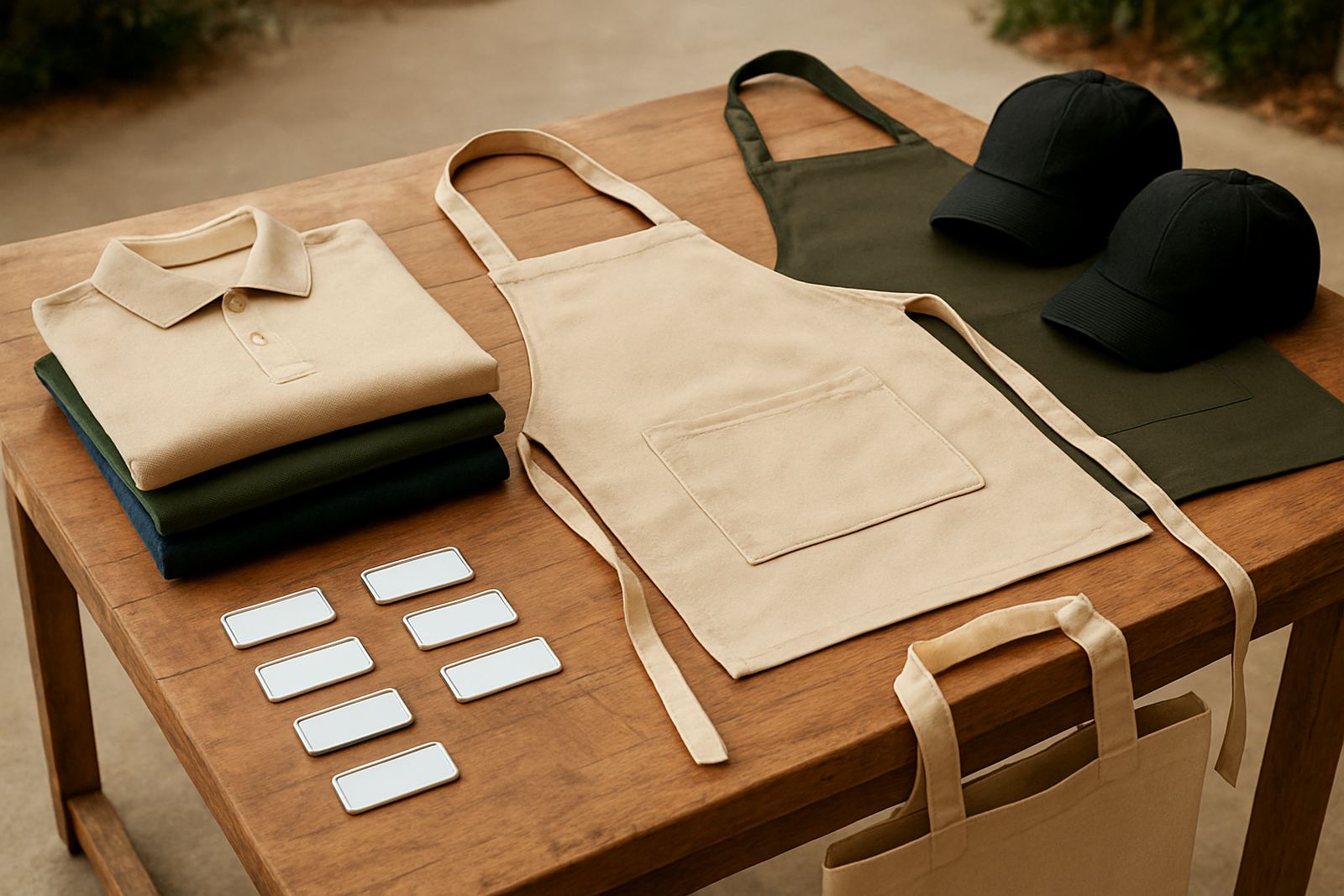
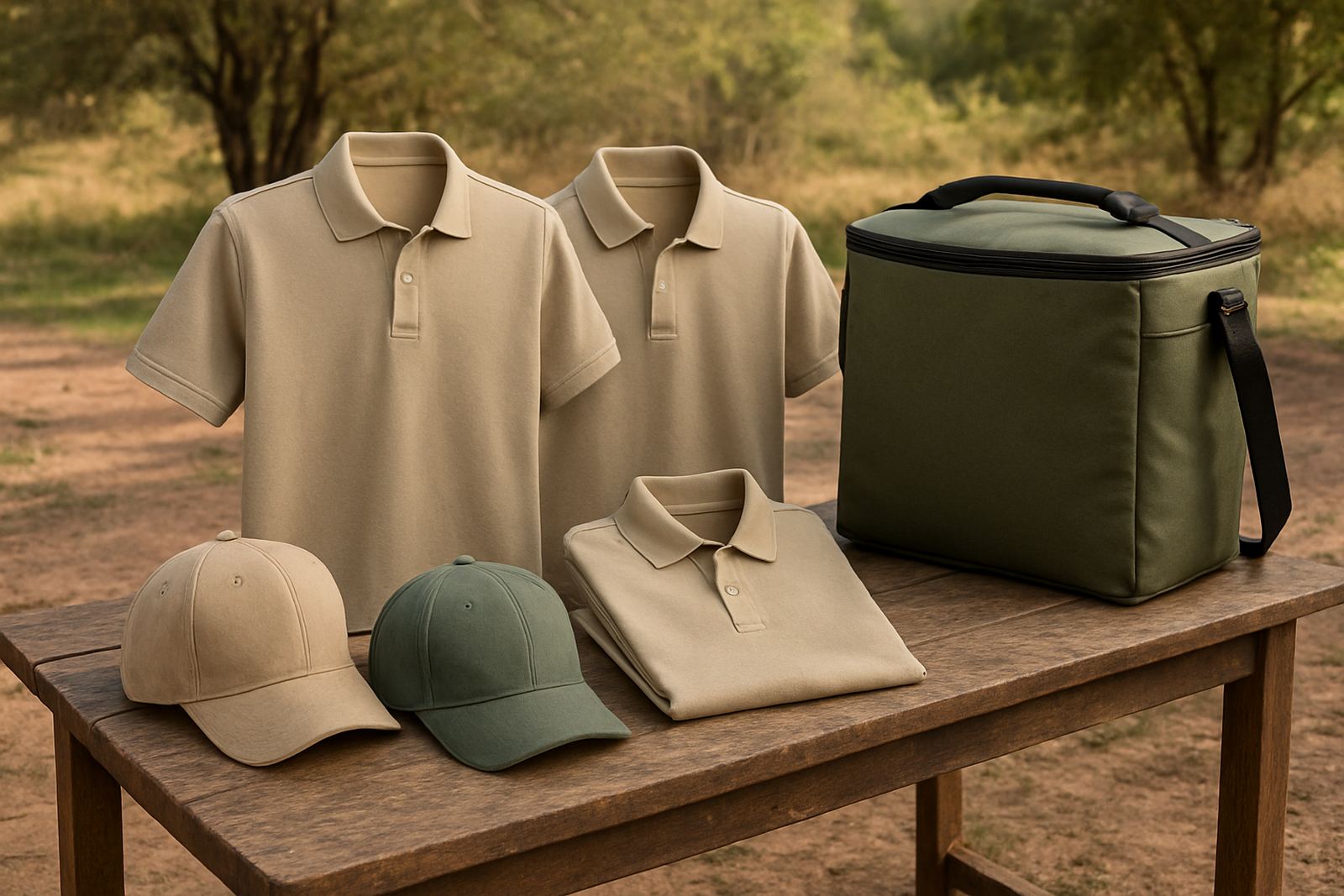
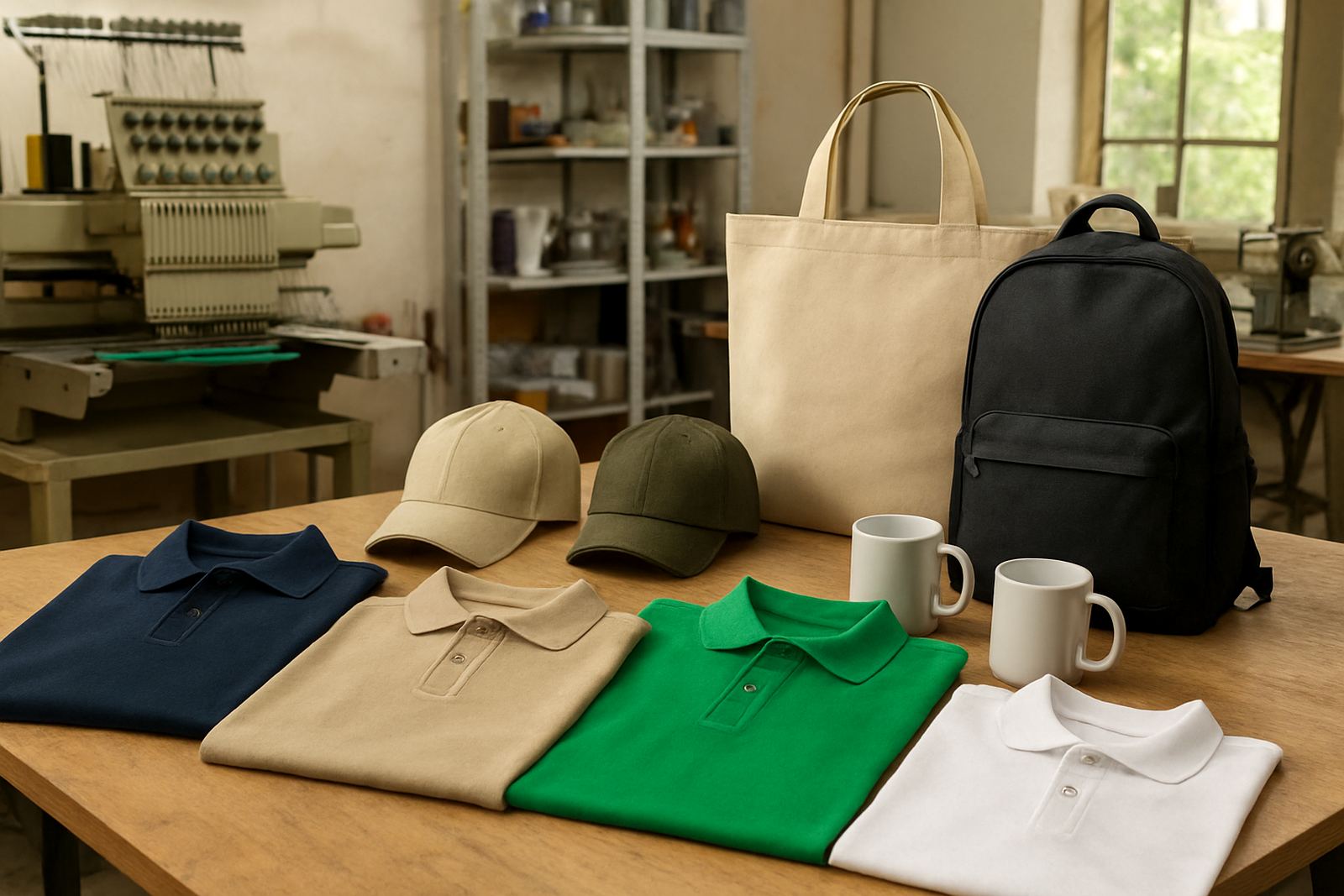
- Embroidered golf shirts for supervisors and front-facing staff
- Printed T shirts for large teams and casual daily wear
- Aprons for housekeeping, kitchens and laundry areas
- Caps or peak caps for sun protection and easy identification
- Branded carry bags for cloths, sprays and small tools
- Name labels for individual team members
For larger sites, it helps to colour-code by department. For example, one colour for housekeeping, another for public area cleaners, and another for supervisors. That makes shift handovers quicker and reduces confusion when teams are spread across multiple buildings. It also helps with bulk order packing when you need separate sets for different branches or shifts.
Best Branding Choices for Daily Washing
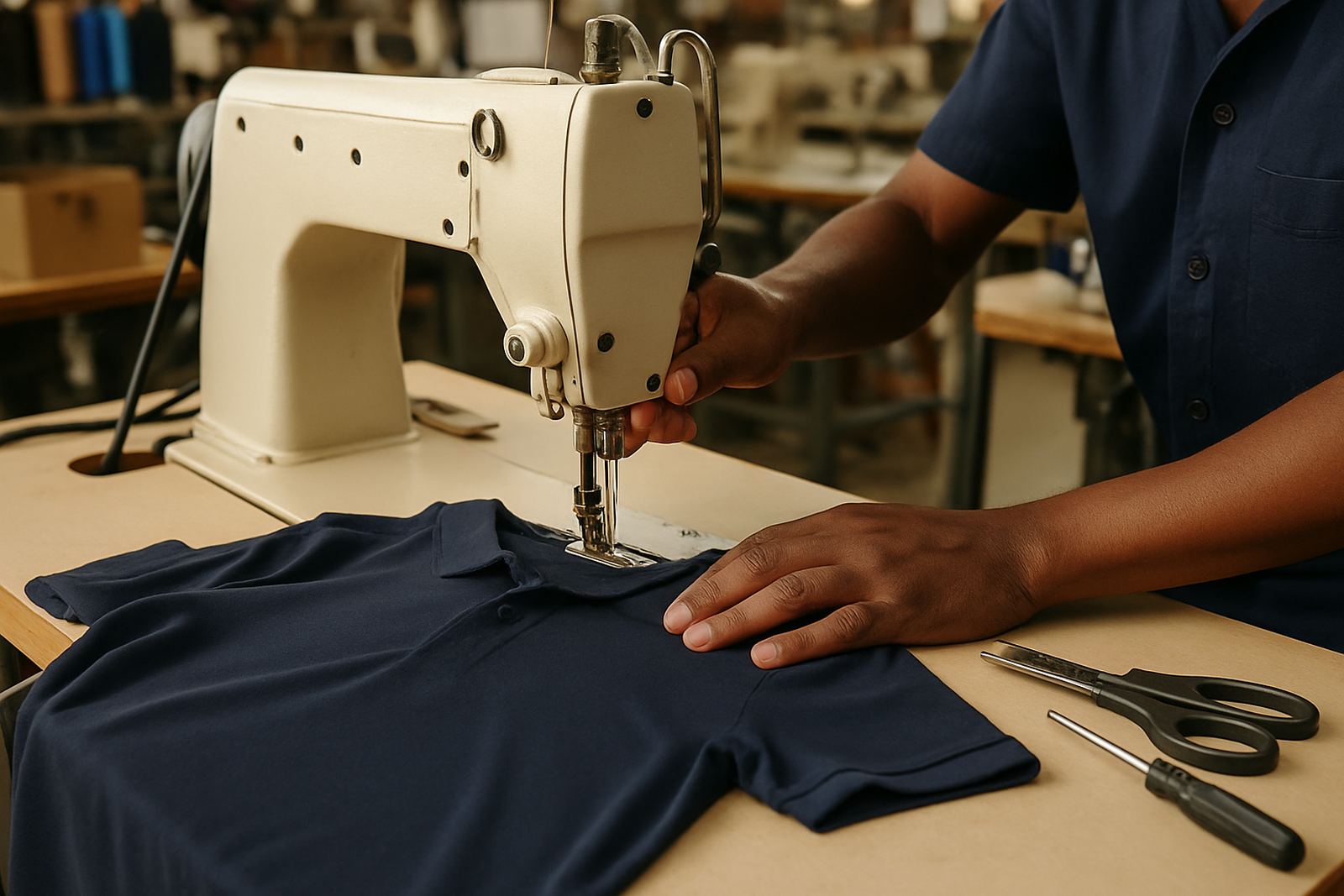
Cleaning uniforms are washed often, so the branding method matters. Embroidery is usually the best choice for shirts, golf shirts and caps because it stays neat through repeated laundering. Screen printing works well on cotton T shirts and aprons where you want a larger logo or wording. Sublimation is useful on lighter technical garments where the design needs to be part of the fabric.
For crews that work in humid Lowveld conditions, we often suggest stitched branding on the chest and a smaller mark on the sleeve or back. This keeps the uniform looking smart without making the garment feel heavy. If the staff work near moisture, steam or cleaning chemicals, avoid very large prints on high-friction areas because they wear faster.
We also assist with logo digitising so the artwork is set up properly before production. That step matters because a logo that looks fine on paper can lose detail when stitched small. Clean lines, readable names and simple layouts usually give the best result for busy work teams.
Planning the Layout for Teams Across Multiple Sites
If you manage cleaners across Mbombela, Nelspruit Central, Kabokweni or Ngodwana, the biggest mistake is ordering the same uniform for every role without checking how each team works. A reception cleaner needs a different look from a warehouse or garden crew. Supervisors may also need a more polished version so they stand out at client sites.
Start by listing the roles, sizes and garment types. Then decide where each logo or name should sit. A common layout is logo on the left chest, staff name on the right chest, and company name across the back for larger teams. For caps, a small front logo is usually enough. For bags, a larger logo can be used without crowding the design.
- Group staff by role before placing the order
- Check sizes with actual samples, not guesses
- Keep one standard colour per department if possible
- Leave room for names if staff turnover is high
- Use the same logo layout across all branches for consistency
We can prepare mock-ups and approvals before production so you can confirm the placement, wording and colour choices. That saves time and helps avoid expensive reprints later.
Common Mistakes with Cleaning Crew Orders
One common mistake is choosing a fabric that looks smart on day one but does not handle repeated washing. Another is placing a large print where it gets rubbed by aprons, belts or equipment. Small details make a big difference when uniforms are worn every day and washed at least once a week, sometimes more.
Another issue is ordering too few extras. Cleaning teams often need replacements for new staff, damaged items or size swaps. If you only order the exact headcount, you may end up with mismatched uniforms later. We usually suggest a small reserve stock, especially for larger operations or schools that hire seasonally.
People also forget that names and titles help with supervision. For example, a cleaner, supervisor and shift lead should not all wear the same plain shirt if they move through the same building. Clear identification helps with accountability and makes site management easier. It also gives clients and tenants a neater impression when the team is visible in public areas.
Budget Ranges for Cleaning Crew Workwear
Budget depends on garment type, branding method and order size. Simple printed T shirts are the most affordable option for large teams, while embroidered golf shirts, caps and personalised items sit a bit higher. As a guide, plain branded cleaning wear can start from around R120 to R180 per shirt for basic print runs, while embroidered golf shirts may range from about R180 to R320 each depending on fabric and stitch count.
Caps usually fall in the lower range, often around R85 to R160 each when branded simply. Aprons and bags vary with size and print coverage, but many clients work within a range of R95 to R220 per item. For mixed orders with shirts, caps and bags, a sensible starter budget for a small crew may be around R2 500 to R6 000, while larger sites often plan from R8 000 upwards.
If you are ordering for schools, estates or multi-site cleaning contractors, it helps to set the budget per staff member rather than per item. That makes it easier to compare options and balance durability against cost. We can also split orders into phases if you need to start with supervisors first and then roll out the rest of the team later.
What a Practical Order Looks Like in the Lowveld
A typical order for a cleaning crew in Mbombela might include branded shirts for all staff, embroidered golf shirts for supervisors, caps for outdoor work and a few extra garments for new hires. For a team working in White River or Hazyview, lighter fabrics and strong colour contrast are often preferred because of heat and bright daylight. In Malelane and Barberton, crews working across larger properties may also benefit from bag branding so equipment is easy to identify between sites.
From first enquiry to approval, the process is straightforward. You send the logo and your garment requirements through the enquiry form on our contact page, we prepare the artwork and mock-ups, then production starts once details are approved. For teams that need regular restocks, it helps to keep the same layout and sizes on file so repeat orders are quicker. That is especially useful for schools, contractors and facilities teams with changing staff numbers.
At CK Embroideries in Riverside, Mbombela, we work with businesses and schools across the Lowveld that need uniform clothing that is simple, tidy and practical. The aim is not just a branded shirt, but a crew that looks organised every time they arrive on site.