How to measure before you order
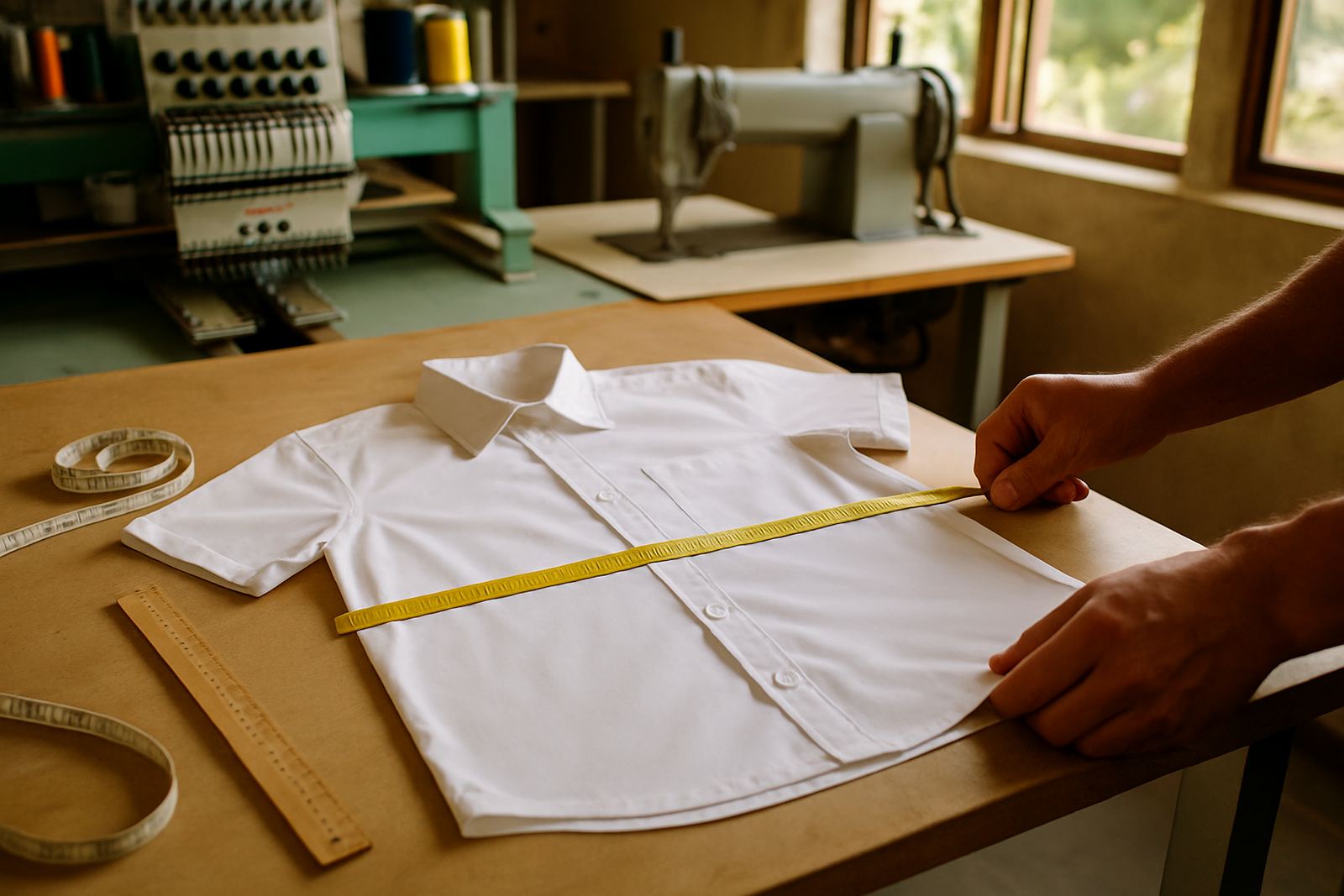
The easiest way to avoid sizing mistakes is to measure a garment that already fits well. Lay it flat on a table or clean floor, then measure across the chest from side seam to side seam and from the highest shoulder point to the hem. For trousers and skirts, measure the waist and the inside leg. If you are measuring a person, use a soft tape measure and keep it level, not tight.
For schools and companies in Mbombela, White River, Hazyview and Malelane, it helps to measure a few people from the group before placing a bulk order. Body shapes differ, and one size does not suit everyone. If your team wears uniforms daily, allow a little room for movement, especially for shirts, golf shirts and jackets.
- Measure over light clothing for the most accurate result
- Do not pull the tape measure too tight
- Check both chest and length on tops
- Use the same method for every person in the order
Children's and school wear sizing guide
School wear is often ordered by age group, but age alone is not enough. Some learners need a larger waist and some need extra length, so it is better to check the actual garment measurements. This is especially useful for skirts, shirts, shorts and tracksuits ordered by schools around Mbombela, Kabokweni and Ngodwana.
When in doubt, choose the size that gives a little room for growth rather than a tight fit. Children move a lot during the school day and a shirt that is too small will ride up at the shoulders or pull across the chest. For blazers and knitwear, make sure there is enough space to layer a shirt underneath too.
- If the learner is between sizes, take the larger size
- Check sleeve length on winter items
- Allow for shrinkage only if the fabric type is known to do so
- For tracksuits, check jacket length as well as trouser length
Corporate shirts, golf shirts and work wear fit
Corporate clothing should look neat but still be comfortable through a full workday. Golf shirts, office shirts, overalls and jackets are usually ordered in mixed sizes, so it is important to know whether the fit is regular, slim or relaxed. A shirt that is too tight across the chest will not sit well once embroidery or print has been added.
For staff in sales, reception, warehouses or field work, we recommend checking shoulder width and chest measurement first. If the clothing will be worn in the Lowveld heat, a slightly easier fit often feels better. For cooler mornings in Hazyview or Barberton, a jacket or fleece may need enough room for a shirt underneath, so plan for layers rather than a single thin garment.
- Ask staff to try on a sample garment where possible
- Check cuff, collar and shoulder fit first
- Leave room for movement in busy work roles
- Choose one size set for the whole team to keep the order neat
Caps, aprons and one-size items
Caps, aprons and similar items are often called one-size, but there is still fit to consider. Caps should sit comfortably on the forehead without pressing too hard at the temples. If the cap will be worn daily by different people, an adjustable back is usually the best option. Aprons need enough width for movement and enough neck room so staff can wear them for long shifts.
For bags and gifts, the size chart may refer to the item dimensions rather than body fit. This matters for laptop bags, drawstring bags and bottle holders. If you are ordering branded gifts for a school or company event, check the internal size of the item so it suits the purpose and does not feel too small in hand.
- Check adjustable ranges for caps
- Measure apron length from top to hem
- Confirm bag size in millimetres or centimetres
- Match the item size to its daily use, not only to looks
What to do when sizes are between two options
If someone falls between two sizes, the best choice depends on the garment and the job it will do. For fitted shirts and blouses, the larger size is usually safer. For items that will be worn over other clothing, such as jackets or windbreakers, go up a size if you are not sure. It is easier to make a garment slightly smaller in how it is worn than to make it bigger after production.
For school and corporate orders, we often suggest mixing sizes across the group instead of forcing everyone into one range. That keeps the final result more practical and reduces returns. If you are ordering for a team in Barberton, Malelane or Nelspruit Central, send us the size breakdown with your enquiry form so the order can be checked before production starts.
- Choose larger for fitted items if the wearer is unsure
- Choose larger for layered clothing
- Mix sizes across the group rather than guessing one size for all
- Keep a record of who needs which size for repeat orders
Sending your size list with an order
Once you have checked the measurements, send the size list with names, quantities and any special notes. If some garments need initials, a surname or a different fit, include that clearly so the order can be prepared correctly. This is useful for schools, sports groups and staff uniforms where several people may order the same style but different sizes.
It also helps to mention whether the garments are for men, ladies or unisex fit. A ladies cut can fit very differently to a standard shirt, and the same size label may not feel the same across garment types. Clear information at the start saves time later and helps the final packing run smoothly, with less back and forth on changes.
- List each person's name beside the required size
- Note whether the item is men, ladies or unisex fit
- Include any personalisation details with the size list
- Keep a copy for repeat reordering later on